

Blog
5 Everyday Dishes That Taste Better with the Right Indian Spice Blend

Introduction
There is something deeply personal about the smell of a kitchen in full swing. A pot of dal simmering on a low flame, the sizzle of mustard seeds hitting hot oil, or the moment turmeric meets a warm pan — these are not just cooking steps, they are sensory rituals passed down through generations. At the centre of all of this lies one quiet but powerful element: the spice blend.
Yet, many home cooks underestimate how much difference a well-crafted Indian garam masala can make to an everyday meal. It is not about adding more spices — it is about adding the right ones, in the right form, at the right time. Whether you are cooking for your family on a Tuesday evening or trying to recreate your grandmother’s recipe on a Sunday afternoon, the spice blend you reach for can completely change the outcome on your plate.
In this blog, we will walk through five everyday dishes that most Indian households cook on a regular basis — and show you exactly how the right spice blend can elevate each one from ordinary to unforgettable.
Why Spice Blends Matter More Than You Think
Before we get into individual dishes, it helps to understand why spice blends exist in the first place. Indian cooking is not just about flavour — it is about balance. A good dish achieves a harmony of heat, earthiness, brightness, and warmth all at once. Achieving that balance from scratch with individual spices every single time requires both experience and time.
A pre-made Indian masala blend — when it is crafted thoughtfully — solves this problem elegantly. The individual spices have already been ground, balanced, and combined in proportions that work. You get depth without guesswork. More importantly, a good blend adds consistency, which means your dal tastes just as good on a Wednesday as it does when you made it perfectly last month.
Here is what separates a quality Indian spice blend from a mediocre one:
- Freshness of the whole spices used before grinding
- The ratio between warming spices and aromatic ones
- Absence of fillers, excess salt, or artificial colour
- Proper storage from the moment of grinding to the moment it reaches you
Now, let us look at real dishes where this difference becomes tangible.
Dish 1: Dal
Why Dal Often Falls Flat
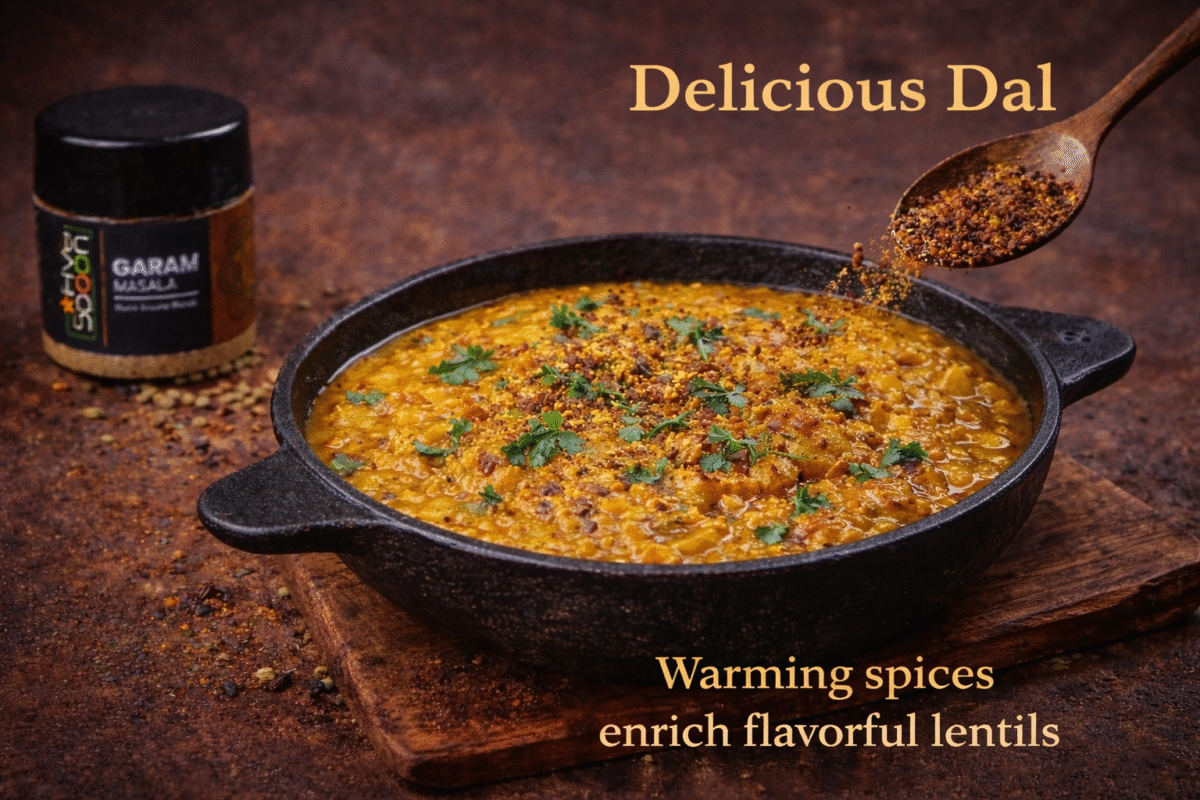
Dal is the most cooked dish in Indian homes, and ironically, it is also one of the most commonly under-seasoned ones. Most people boil their lentils well, add a basic tadka of mustard seeds and dried chilli, and call it done. The result is edible, but not memorable. The problem is not the lentils — it is the lack of layered flavour.
How the Right Spice Blend Changes Everything
A balanced Indian spice blend added at the right stage brings warmth, body, and a gentle heat to dal that basic tadka simply cannot provide. The trick lies in the complexity — you want the earthiness of cumin and coriander to play against the warmth of black pepper and clove, with just enough dried mango powder or dried tomato to lift the overall taste with a touch of sourness.
Practical Tip
Do not add your garam masala or dal masala blend at the very beginning. Instead, add it roughly two minutes before you turn the flame off. This preserves the aromatic top notes that get destroyed by prolonged heat. A small pinch stirred into the hot dal at the end can make the entire pot taste freshly spiced.
Dish 2: Aloo Sabzi
The Common Mistake Most Cooks Make
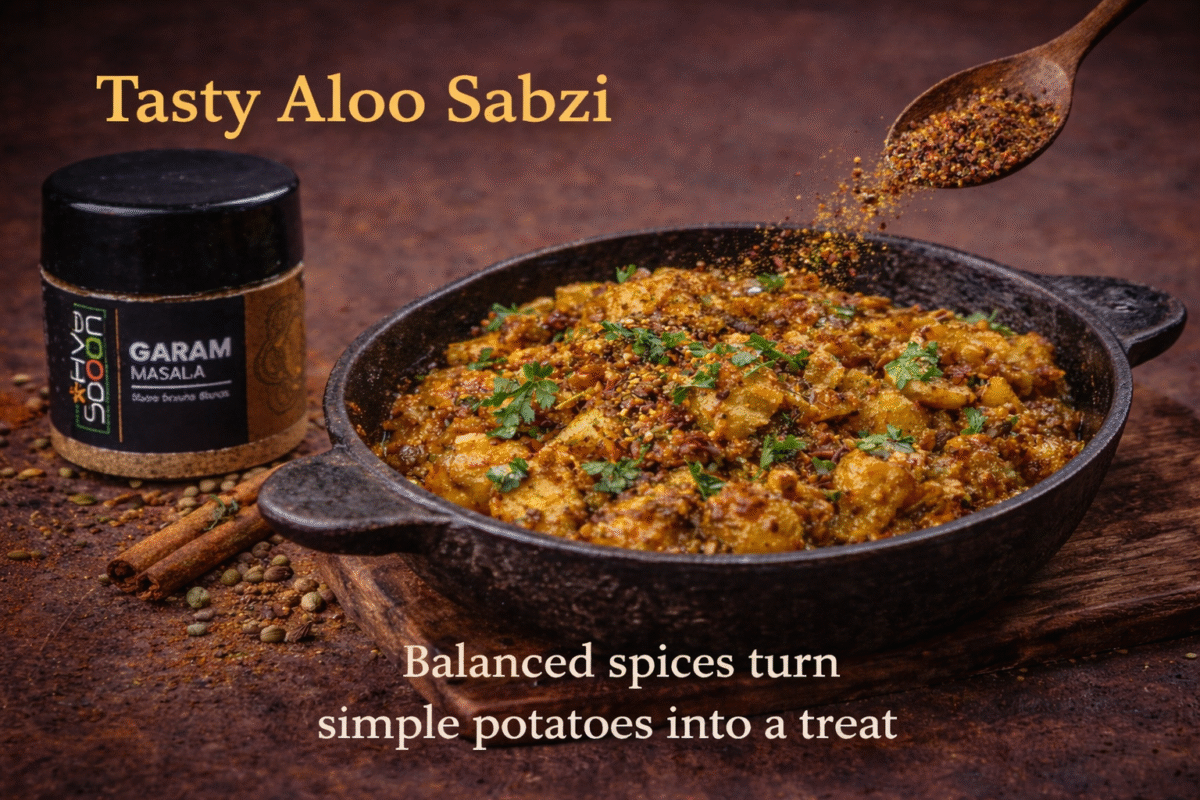
Aloo sabzi is one of those dishes that can either be deeply satisfying or completely forgettable, depending on one thing — the spicing. Most home cooks use only turmeric, red chilli powder, and salt. While these are foundational spices for Indian cooking, they do not provide enough complexity for a dish where the main ingredient is a bland canvas, like a potato.
The Flavour Upgrade
Adding a well-rounded Indian masala blend to your aloo sabzi — one that includes dried fenugreek leaves, fennel, and a hint of amchur — transforms the dish entirely. The potatoes absorb the spices and take on a savoury-tangy character that makes them genuinely craveable. This is the kind of aloo sabzi people ask for the recipe of.
Practical Tip
Before you add the potatoes to the pan, let your spice blend sit in the hot oil for 30 to 40 seconds. This process — often called blooming — wakes up the fat-soluble compounds in the spices and releases their aroma into the oil. When the potatoes go in after, they coat themselves in that flavoured oil, resulting in a far more fragrant and deeply seasoned final dish.
Dish 3: Vegetable Pulao
Why Aroma Defines a Good Pulao
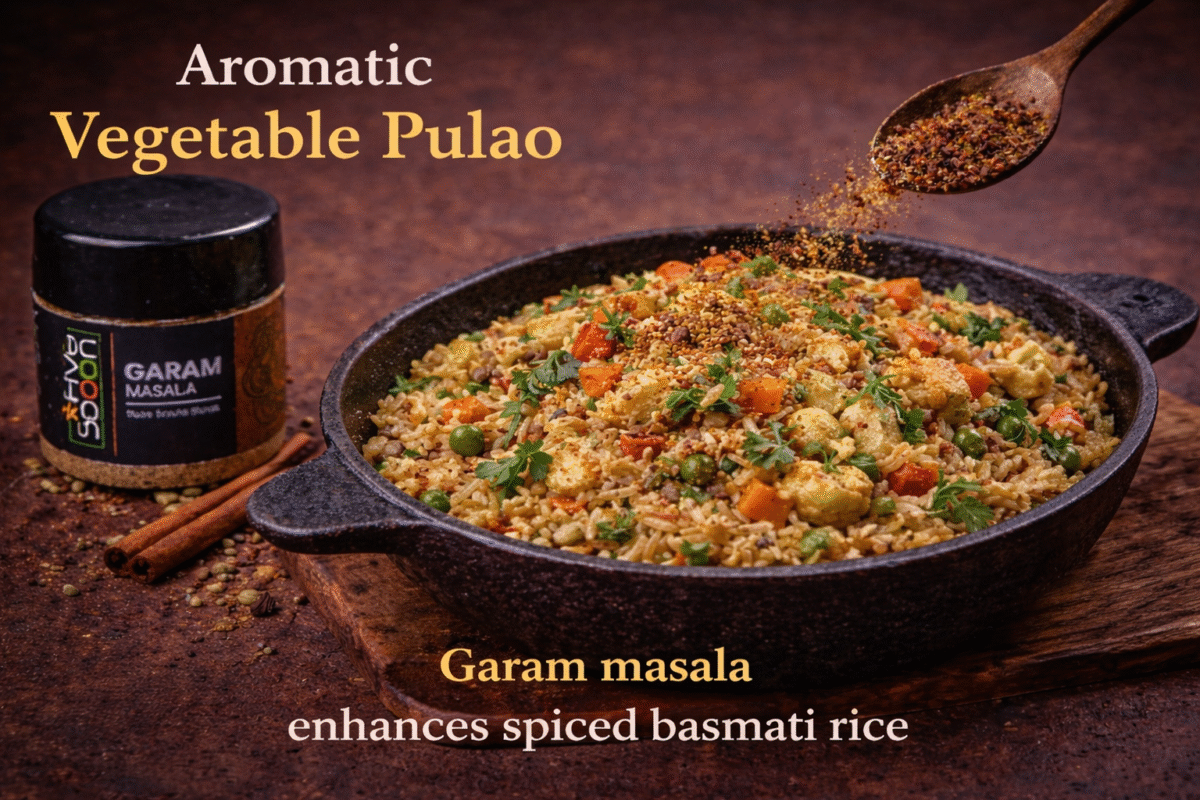
Vegetable pulao is, at its core, a fragrant rice dish. Unlike biryani, which is built on a complex foundation of slow-cooked masala and marinated ingredients, pulao gets its character almost entirely from how well the spicing is handled in the first two minutes of cooking. If the aroma is not built properly from the start, no amount of vegetables or garnish will rescue the dish.
How Spice Blends Work in Pulao
Pulao works best when whole spices and a ground spice blend are used together. Whole spices like bay leaf, cardamom, and a small piece of cinnamon provide the base fragrance as they sizzle in ghee. Once that aroma is established, adding a pinch of finely ground spices for Indian cooking — one that contains a mild blend of cumin, coriander, and dried herbs — gives the rice a unified, rounded flavour that holds together well.
Practical Tip
Timing matters enormously in pulao. Add your whole spices to the ghee first, wait until they begin to crackle and release fragrance, then add onions. Only after the onions have turned golden should you add your ground spice blend. By this point, the oil is hot enough, and the moisture from the onions helps the ground spices dissolve without burning — a small step that makes the pulao taste far more professional.
Dish 4: Paneer Curry
The Problem With a Flat Gravy
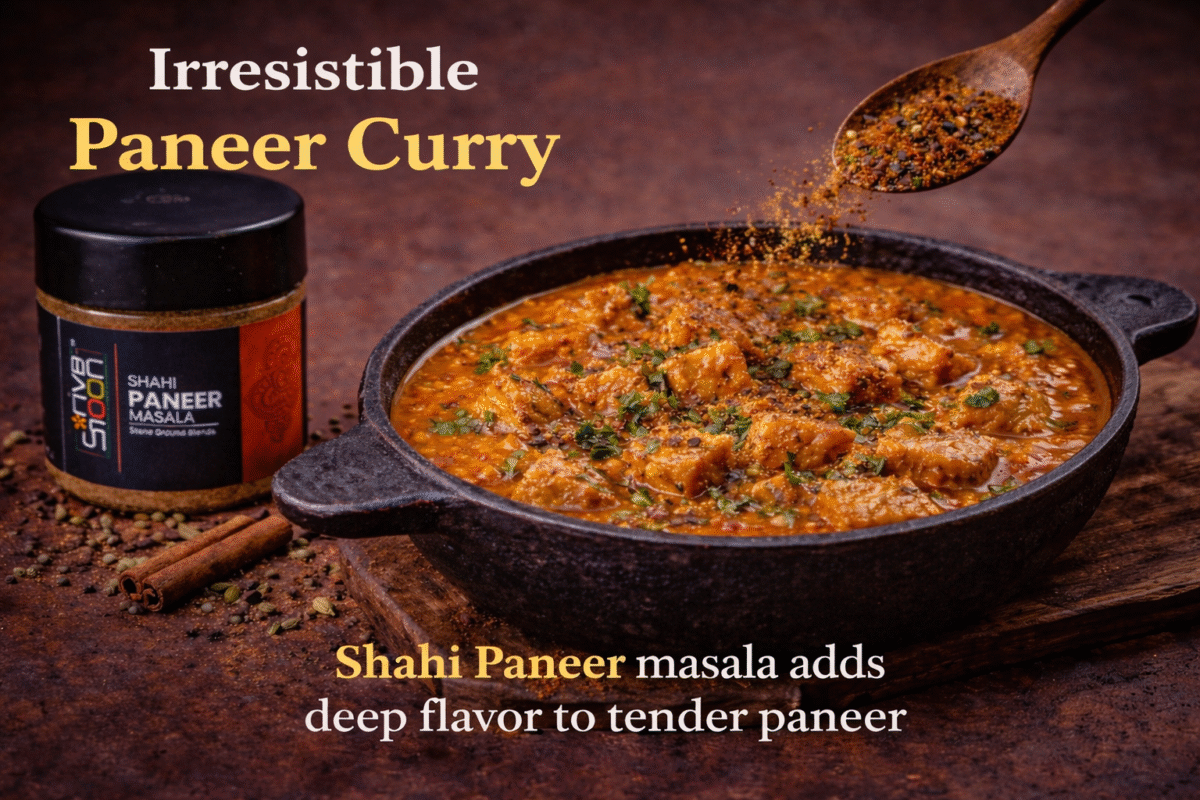
Paneer curry — whether it is paneer butter masala, shahi paneer, or a simple home-style kadai paneer — shares a common problem in many kitchens: the gravy tastes rich but flat. There is creaminess from the tomato-onion base, and colour from the chilli powder, but something essential is missing. That something is spice depth.
How Spice Blends Add Depth to the Gravy
A well-formulated Indian masala blend used in paneer curry adds the layers that basic chilli-turmeric combinations cannot. Think about what you want from a good paneer gravy: a warm hum of spice underneath the creaminess, a slight smokiness, and an aromatic finish. This is exactly what a quality garam masala or kitchen king blend delivers — provided it is used at the right stage.
Practical Tip
For paneer curries, add your spice blend in two stages. First, add half the amount when the tomatoes are cooking down — this allows the blend to integrate with the base and cook out any raw aroma. Then, add the remaining half just before adding the paneer cubes. This two-stage technique creates a gravy that tastes both deep and fresh at the same time.
Dish 5: Quick Noodles or Masala Maggi
Why the Packet Seasoning Is Never Enough
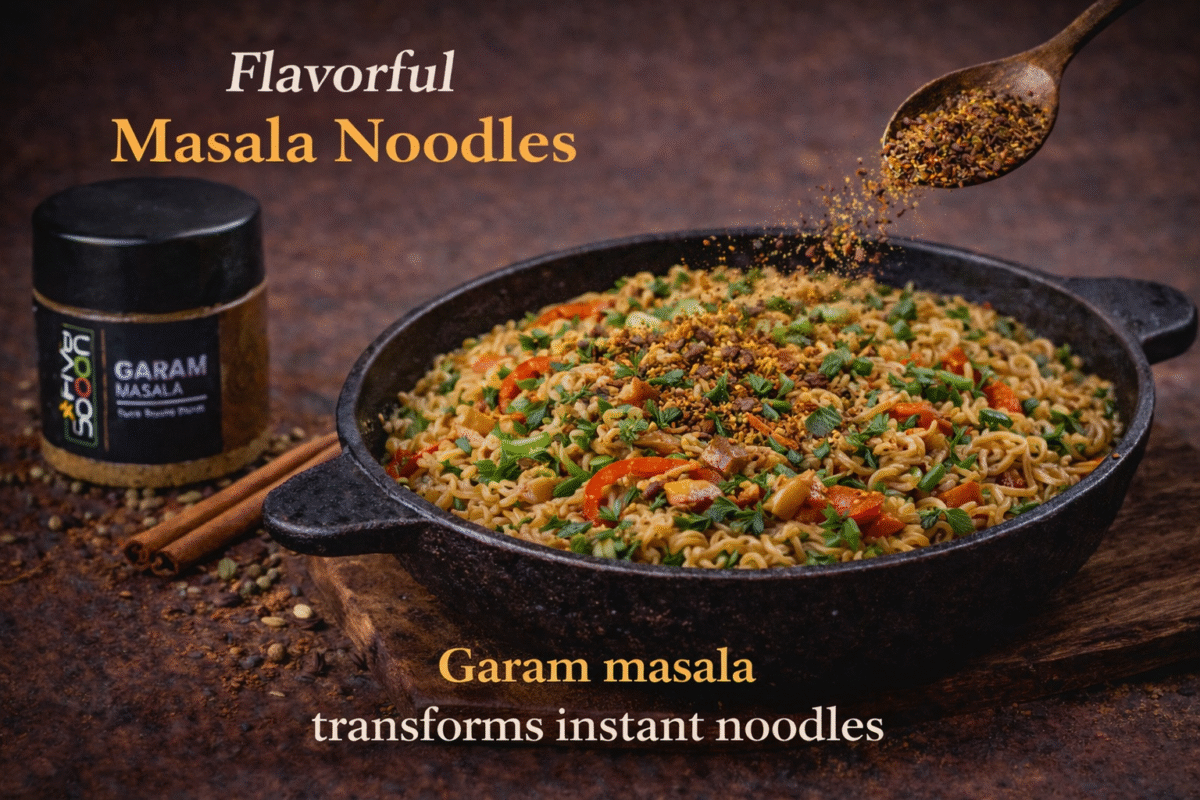
Instant noodles have a nostalgic place in Indian households, but most people secretly know that the tastemaker sachet that comes with them is only doing half the job. It provides salt and a generic savoury note, but there is no real complexity, no warmth, and no character. The result is noodles that are satisfying in a pinch but not something you would genuinely look forward to.
A Simple but Effective Upgrade
Adding a small pinch of a well-made Indian spice blend to your noodles — particularly one that contains dried ginger, black pepper, and roasted cumin — changes the flavor profile dramatically. The noodles go from being one-dimensional to having a warm, spiced character that actually tastes like food made with intention.
Practical Tip
Start by melting a small amount of butter in the pan before adding your cooked noodles. Toss in the tastemaker as usual, then add a pinch of your spice blend along with a few chilli flakes. Let everything come together on high heat for 30 seconds. The butter carries the fat-soluble aromatics from the blend and coats every strand evenly. It is a two-minute upgrade that makes a surprisingly large difference.
Tips for Using Spice Blends Effectively at Home
Knowing which blend to use is only half the equation. Here is how to get the most out of your spice blends every single day:
- Less is often more: A well-balanced blend does not need to be used by the tablespoon. Start with a quarter teaspoon and build from there. Over-spicing is harder to fix than under-spicing.
- Mind the stage of cooking: Whole spices go in first, ground blends go in mid-way or at the end, depending on the dish. Adding a blend too early can make it bitter; adding it too late means it never integrates properly.
- Store properly: Keep your spice blends in airtight glass containers away from direct sunlight and steam. A blend stored near your stove ages much faster and loses potency.
- Buy smaller quantities more often: A fresh 100g pack of Indian masala blend will always outperform a 500g pack that has been sitting in your cupboard for eight months.
- Taste as you go: This is the habit that separates a good home cook from a great one. Spice blends from different brands vary in strength — your palate is the only reliable guide.
Great home cooking is rarely about big, dramatic changes. It is almost always about small, consistent decisions made over time. Choosing the right Indian spice blend for your dal, your aloo sabzi, your pulao, your paneer curry — these are small decisions that compound into a kitchen that genuinely produces food worth gathering around.
Conclusion
The five dishes covered in this blog are things most Indian families cook several times a week. They are not special-occasion meals. They are the quiet, everyday food that make a house feel like home. And that is exactly why the spice blend you use for them matters so much — not for a dinner party, but for a regular Thursday night when everyone is hungry, and the kitchen needs to deliver.
Start with one dish. Pick the one you cook most often and give it the spice blend upgrade it deserves. Chances are, you will not stop at just one.
